


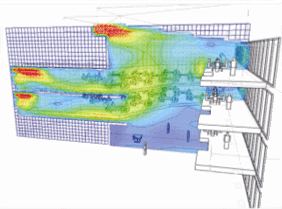


Discussions about BIM (Building Information Modeling) typically focus on the design of the outside of the building and the many benefits BIM brings to that aspect of architectural design. We read about massing models and curtain walls, expressive roof forms, and detailed wall sections. But how is BIM being applied to the design of the inside of the building - the finishes, the fixtures, the area requirements, the furniture schedules?
Regardless of the specialization of
the interior design group - corporate, hospitality, retail, etc. - interior
designers cite several key advantages of BIM:
·
The
speed and ease of creating an interior design model, coupled with the ability
to visualize that design
·
The
ability to capture and manage the design as multiple options within a single
model - options that may vary anything from space layout to material selections
·
The
richness and reliability of the data embodied within the building information
model. This is fundamental for early tasks such as schematic space planning and
master scheduling
·
The
accuracy of detailed design activities like quantification and costing, and
finally,
·
The
production of well-coordinated documentation.
|
|


With the construction industry showing early signs of revival, design firms the world-over are now confronted with the new challenge of scaling up to accommodate the anticipated work. Amongst the various options being considered is the concept/model of Worksharing or Outsourcing in relative terms.
Today companies are not outsourcing
just for cost benefits but have well realized the fact that there is much more
beyond reaping the benefit of economy. Studies reveal that Design firms outsourcing
various non-core activities to vendors in the developing countries such as
India, reaped many more strategic benefits beyond just cost savings ; listed
below are the top 5 reasons why design firms should explore the business model
of Outsourcing/ Worksharing.
Top 5 Benefits of Outsourcing
1.
Enhance
competitive edge
Operating a global
supply-and-demand chain is becoming increasingly complex in today’s competitive
environment. By Outsourcing strategically
decided activities, an organization can deliver their projects more effectively
than their competitors, thereby outperforming them. This means they are ahead
in four areas: being responsive to customers, innovation, quality, and
efficiency.
2.
Increase
shareholder value
Outsourcing helps in building
capacities and preserving capital investment. As Outsourcing
reduces the need to invest capital funds in Infrastructure
and human resources of non-core business functions these funds can be diverted
towards strategic business expansion. This in the long run results in increase
in shareholder value.
3.
Access
to new markets
While entering new
geographies, companies can fend off competition from local players. Outsourcing
provides access to off-shore resources with
world-class capabilities who have already worked and gained expertise by
working with many clients facing similar challenges in these geographies. This
reduces company’s effort in chasing methodologies and trained people.
4.
Achieve
tighter dead lines
Since the Outsourcing firm
acts as a ‘Virtual Studio’ for the client, it gives the client the added agility
required to bid aggressively for projects with challenging deadlines. This can
be achieved without any compromise on the quality of work, delivered by their Virtual
Studio.
5.
Handle
more projects
By opting for Outsourcing,
the internal resources of an organization are freed for other core activities,
thus enabling them to redirect these people to greater value adding activities
such as getting new projects and spending more time with their customers. This
results in more efficient project handling and satisfied end customers and
thereby a reason for repeat business.
Thus we have seen that though in the
past, cost had always been the motivation behind Outsourcing, but in today’s
competitive world Outsourcing moves beyond cost benefits.
These were few of the top rated reasons to Outsource apart from
cost benefits.
As Mr. John McCartin, Managing
Principal of a leading Architecture Design firm based in New York, rightly quoted, “If you deprive yourself of outsourcing and your competitors do not,
you're putting yourself out of business”.
|
|